
Wholesale Beads UK: Best Bulk Buys for Makers and Small Businesses
You do not need a trade account to buy beads in bulk in the UK. Mixed bead bags, multi-string bundles and clearance lots bring the cost per bead down to a few pence without a minimum spend, a business registration or a wait for approval, and for most makers they are a better buy than a trade portal anyway.
That is worth saying plainly at the top, because almost everything ranking for wholesale bead terms is either a trade-only site with a £150 minimum or a retailer being vague about which one it is. TotallyBeads is a retailer. We sell in volume through mixes, bundles and clearance rather than through a trade account, and this article shows you the arithmetic so you can judge whether that works for what you make.
Browse the mixed bead bags range to see what volume buying looks like in practice. Orders placed before 12 noon ship the same day from Clacton-on-Sea.
What does "wholesale beads UK" actually get you?
Searching that phrase returns three different kinds of business, and knowing which is which saves a fortnight.
Type one
True trade wholesalers. Registered business only, minimum order values in the low hundreds, trade price lists behind a login. Genuinely cheap per unit if you are buying a kilo of one thing. Useless if you want forty different colours.
Type two
Importers and drop-shippers. Very low headline prices, four to six week lead times from overseas, no returns worth having, and hole sizes that are frequently not what the listing says.
Type three
UK retailers selling volume formats. Mixed bags, bundles, clearance lots and multi-string packs at retail, no account needed, next-day-ish delivery. This is the category TotallyBeads sits in.
For a maker turning over a few hundred pounds a month at craft fairs or on Etsy, the third option almost always wins on total cost, because the first two only beat it once you are buying a single item in genuine quantity and can absorb the lead time.
How do you work out cost per bead?
Divide the pack price by the number of beads. It sounds too obvious to state, and almost nobody does it before buying.
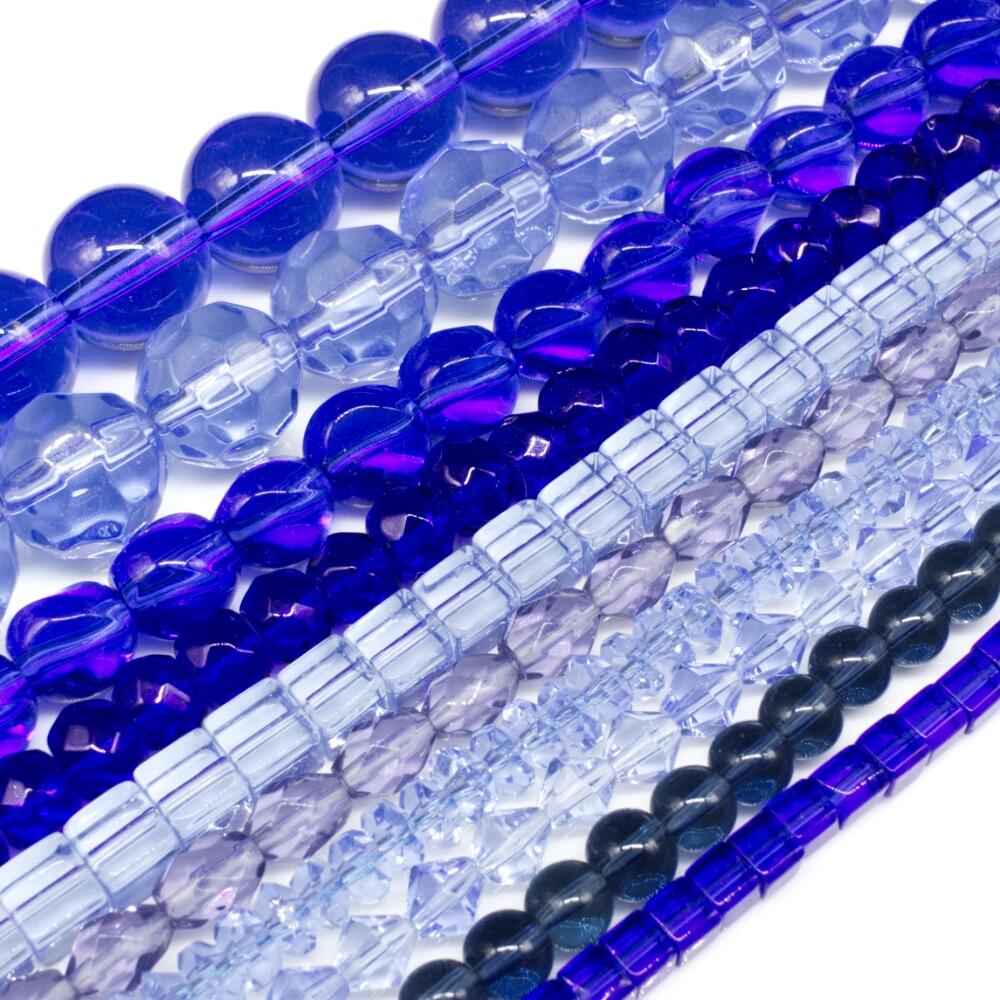
Take a ten-string glass bead mix at £5.99. Ten strings at 12 to 16 inches each, with bead sizes running from 4 mm to 15 mm, gives you somewhere between 400 and 700 beads depending on how the sizes fall. Call it 500 as a working figure. That is roughly 1.2p a bead.
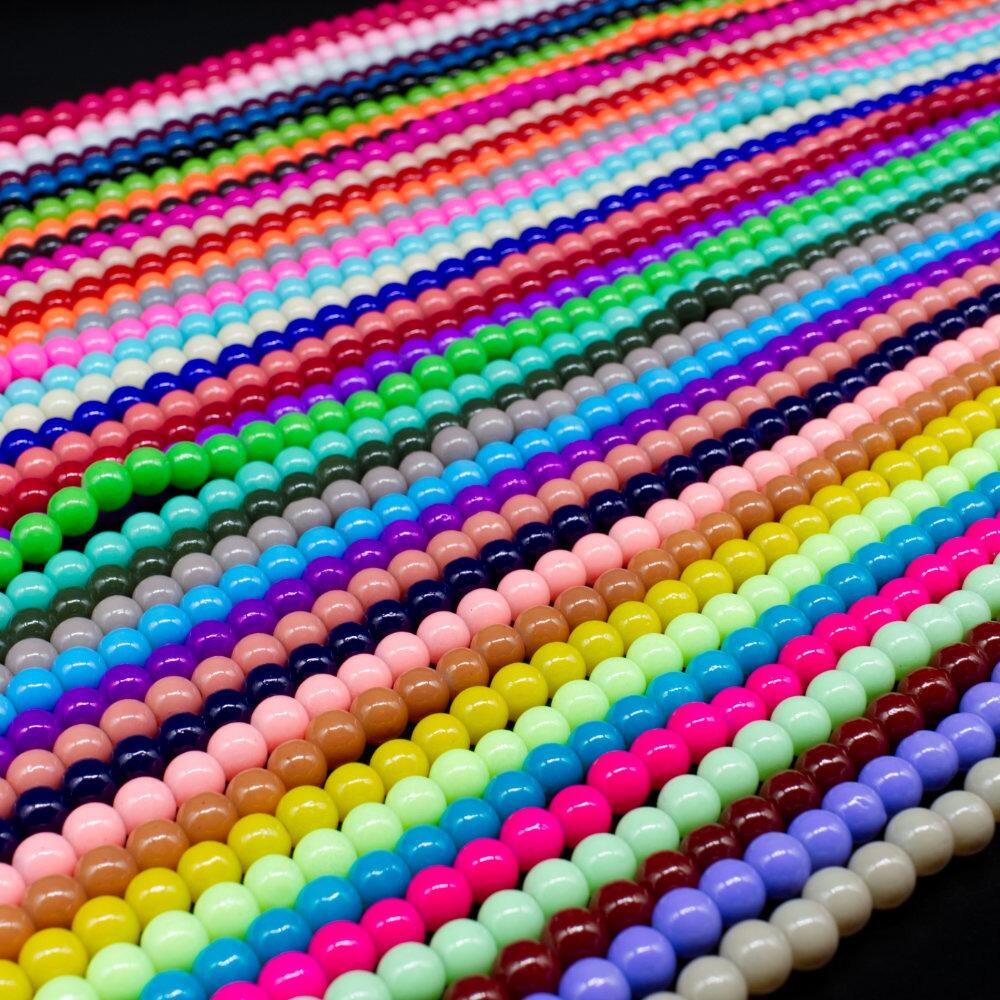
Now take a 6 mm opaque glass bundle at £29.99 for forty strings. Forty 15 inch strings at 6 mm is about 63 beads each, so around 2,500 beads. That comes out near 1.2p a bead as well, but every bead is the same size and you know what you are getting.
Same unit cost, completely different purchase. The mix gives you variety and unpredictability. The bundle gives you a known quantity of one size across a colour range. Which is right depends entirely on what you make, and that is the decision the rest of this article is about.
Bulk buying options compared
Three formats, three different jobs. Pack contents as listed on each product page.
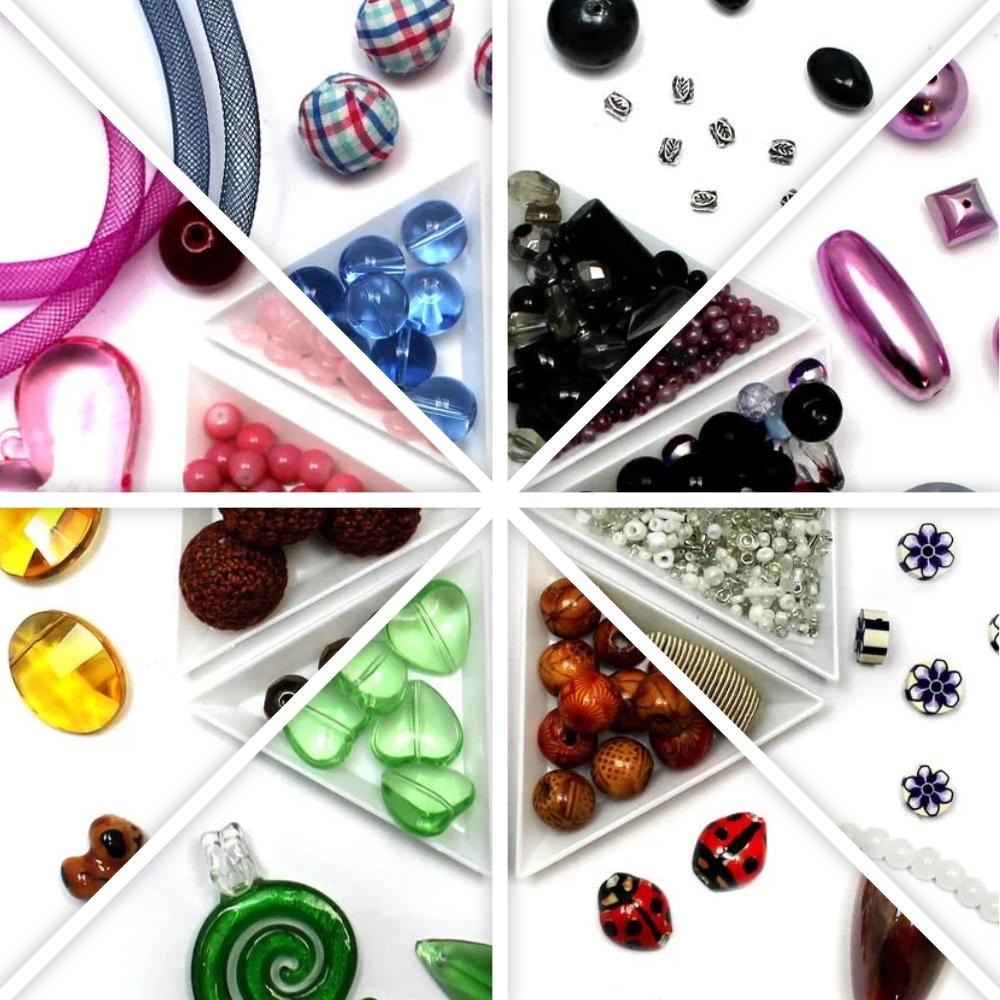
Also worth a look on the acrylic side: Acrylic Mixed Beads Assorted Styles 200g, £5.00 down from £10.00, 10 mm to 40 mm.
Which bulk format suits which maker?
Four formats, four different jobs. Buying the wrong one is the most common and most expensive mistake in volume purchasing.
Mixed bags, for varied stock
A mixed bag gives you a spread of shapes, sizes and finishes within a colour family. Ten strings of blue glass covers pale sky through to navy, in rounds, rondelles, drops and faceted shapes, at sizes from 4 mm to 15 mm.
That suits a craft-fair seller who needs forty different bracelets on the table and does not need any two to match. It suits anyone learning what they like before committing. It also suits gift-making, where variety is the point.
It does not suit repeat production. If someone orders six of the bracelet you made last month, a mix will not give you six identical builds.
Single-size bundles, for repeat production
Forty strings of 6 mm rounds across a rainbow of colours is a different animal. You know the size, you know the hole, you know roughly the count, and you can build the same design forty times.
This is the format for anyone with a design that sells. It is also the right buy for workshops, because you can hand every participant the same materials.
Fiver packs, for testing at low risk
Fifteen one-pound mixed bags for £5 is a way of finding out whether a colour family sells before you commit real money to it. The fiver pack range rotates, and the packs are excluded from other offers, so they are a fixed low-risk entry point rather than a discount to stack.
Clearance and end-of-line, for opportunists
The clearance range is where discontinued colours and overstock go. Prices are the lowest on the site and the catch is obvious: what is there today will not be there in three months. Buy clearance for one-off pieces and for colour experiments. Do not build a signature design around it.
The gemstone clearance and premium bead mixes sections work the same way at a higher material grade.
What is actually inside a bead mix?
Read the listing, then read it again for what it does not say.
A good mix listing gives you the number of strings, the string length range, the bead size range and the colour family. A ten-string glass mix at 12 to 16 inches with sizes from 4 mm to 15 mm is telling you something specific: you will get a lot of small beads and a handful of large statement pieces, and the large ones will run out first.
What a mix listing rarely tells you is hole size, because it varies across the pack. That is the practical limitation. Assume a mix will contain some beads you cannot string on the elastic you have, and buy a range of gauges accordingly. Our beading elastic range covers 0.5 mm flat through to 1.0 mm round, and a mixed cord pack costs less than a single string of gemstone.
Two other things worth expecting. Some beads in any mix will be colours you would never have chosen, and those are the ones that end up in the spacer jar rather than in a finished piece. And a mix takes sorting. An hour spent putting a ten-string mix into a compartment box is an hour you did not spend making, and it is a real cost even though it never appears on an invoice.
A worked example
A seller preparing for three summer craft fairs bought four ten-string glass mixes in blue, green, white and amber for £23.96, plus a mixed elastic pack at £9.99 and a bag of acrylic spacers at £5. Total outlay under £39. That produced 38 bracelets across the three fairs at an average material cost of roughly £1 each, and the leftover large focal beads went into six necklaces the following month. The sorting took about two and a half hours across two evenings, which is the part that does not show up in the maths but should.
And the other way
A maker with one design selling steadily on Etsy tried the same approach and found it did not work. She could not repeat the build, so every listing photo showed a piece she could not remake. Switching to a single-size 6 mm bundle at £29.99 gave her 2,500 matched beads across a colour range and let her list twelve designs she could actually reproduce. Same money, entirely different outcome, because the format matched the business rather than the other way round.
Do findings and stringing need buying in bulk too?
Yes, and this is where bulk buying quietly falls over.
Beads at 1.2p each look excellent until you attach a £1.20 clasp to every bracelet. The material cost of a finished piece is beads plus stringing plus findings, and on a simple bracelet the findings are often the largest line.
Buy stringing in volume alongside the beads. A mixed pack of six colours of 0.5 mm beading wire at £9.99 covers a lot of pieces. Elastic at £1 for 10 metres covers more. The jewellery supplies range has clasps, findings and chain, and the tools range covers the crimping and cutting kit that makes bulk work fast rather than fiddly.
Beading Wire 0.25mm Mixed Pack 4 colours
Approx 20 metres per reel, 4 reels per pack
£4.99£6.00 Buy the mixed wire pack
Elastic Round Clear - 0.6mm 15 Metres
Thin round cord, suits beads with small holes
There is also the postage point. Four separate orders across four suppliers means four postage charges, and on a £40 stock buy that can be a tenth of the spend. Building one basket that covers beads, stringing and findings is the single easiest way to cut real unit cost, and it is the reason a slightly higher headline price at one supplier often beats a lower one spread across three.
How do you price what you make from a bulk buy?
Materials, time, fees, then margin. In that order, and with all four filled in.
Take a stretch bracelet built from a mix. Beads at roughly 30p for a bracelet's worth, elastic at 2p, packaging at 25p. Materials, 57p. Twelve minutes of making at whatever you value your time at, and if that is £12 an hour then £2.40. You are at just under £3 before you have sold anything.
Selling at £8 on a craft table gives you a workable margin. Selling the same piece on a marketplace that takes listing and transaction fees plus postage means running the numbers again, because a £8 sale online is not an £8 sale.
The trap
The trap is pricing off materials alone. A bracelet that cost 57p in beads feels like it should sell for £3. It should not, because the 57p is the smallest line in the calculation.
Our guide to starting a jewellery brand from home in the UK with customised bracelets covers the business side in more depth, including the parts of pricing that catch people out in the first year.
What are the rules on selling handmade jewellery in the UK?
Anyone selling jewellery in the UK, at any scale, is covered by chemical limits on the metal content. This is not optional for hobby sellers and it is not widely known.
Under assimilated Regulation (EC) No 1907/2006, now enforced as UK REACH, Business Companion, the official Trading Standards guidance service, sets out three limits that matter to a bead maker:
| Nickel | Nickel release must be below 0.5 micrograms per square centimetre per week for any item in direct and prolonged contact with skin, and below 0.2 micrograms per square centimetre per week for piercing post assemblies. |
| Lead | Lead must be below 0.05% by weight in any individual part. |
| Cadmium | Cadmium must be below 0.01%, which is 100 milligrams per kilogram, by weight of metal in jewellery components, beads and accessories. |
Trading Standards enforce these across England, Scotland and Wales.
What that means in practice is straightforward. Buy findings from a supplier who can tell you they are compliant, keep a note of where your components came from, and be careful with unbranded metal components bought from overseas marketplaces where the chemical content is unstated. The beads themselves are usually the easy part. The clasps, chain and spacers are where the risk sits.
Items aimed at children carry additional expectations around small parts and safety. If you are making for under-fourteens, treat that as a separate piece of homework rather than an afterthought.
When is bulk the wrong answer?
Three situations, and they are common.
1When you are still working out what you make. Buying 2,500 beads before you know your style is how people end up with a spare room full of stock they will never use. Start with a fiver pack.
2When cash is tight. Bulk buying is cash conversion. You are turning money into inventory, and inventory only becomes money again when it sells. A maker with £60 spare and no order book is usually better buying £20 of stock three times than £60 once.
3When the design needs consistency you cannot get from a mix. Matched sets, wedding orders, anything with repeat demand. Buy the exact thing.
There is a fourth, quieter one. Beads do not go off, but colours date and dyes on cheap material fade in a sunlit storage box. Stock bought three years ago is not always stock you still want.
Buying beads in volume in the UK
Four things to check before a bulk order, in order of how much they cost you when they go wrong.
The pack contents are itemised. String count, string length, size range, colour family. A listing that says only "assorted beads" is asking you to gamble.
The supplier restocks rather than deletes. A discontinued page means you cannot reorder the format that worked.
Stringing and findings are on the same site. One basket, one postage, one delivery.
Dispatch is fast enough for your deadline. A craft fair on Saturday does not care about a bargain arriving Monday.
TotallyBeads itemises pack contents on every mix listing, holds the stringing and findings in the same checkout, and dispatches the same day on orders placed before 12 noon from our Clacton-on-Sea warehouse. That is the practical case for buying volume from a retailer rather than chasing a trade account you may not qualify for.
Wholesale beads UK FAQ
Do I need a trade account to buy beads in bulk in the UK?
No. Mixed bead bags, multi-string bundles and clearance lots give you volume pricing at retail, with no minimum order and no business registration. Trade accounts only become worthwhile once you are buying a single item in genuine quantity and can wait on lead times.
What is the cheapest way to buy beads in the UK?
Mixed bags and clearance lots give the lowest cost per bead, often around 1p to 2p on glass and acrylic. Fiver packs sit lowest of all. The trade-off is that you do not choose exactly what arrives.
How many beads are in a bead mix?
It depends on the sizes in the pack. A ten-string glass mix at 12 to 16 inches with sizes from 4 mm to 15 mm typically yields 400 to 700 beads. Listings give the string count and size range so you can estimate before buying.
Can I sell jewellery made from bulk beads?
Yes. You are responsible for making sure the finished item meets UK REACH limits on nickel release, lead and cadmium, which mainly concerns the metal findings rather than the beads. Buy components from suppliers who can confirm compliance and keep a record of where they came from.
Is it cheaper to buy beads from abroad?
The headline price is often lower and the total cost frequently is not, once you allow for four to six week lead times, customs handling, unusable returns and hole sizes that do not match the listing. For anything with a deadline, UK stock wins.
What should I buy first if I am new to bulk?
A fiver pack or a single ten-string mix in a colour family you already use. Spend under £10, sort it, make three pieces, and you will know whether volume buying suits how you work before you spend real money.
Buying in volume without buying wrong
The decision is not really about wholesale. It is about matching the format to what you make. Varied stock wants mixes. Repeat production wants single-size bundles. Testing wants fiver packs. Experiments want clearance.
Work out the cost per bead before you buy, put the stringing and findings in the same basket, and price the finished piece off all four lines rather than the beads alone. Do that and volume buying does what it is supposed to do, which is take a real slice off your material cost without leaving you with a cupboard of stock you cannot use.
Browse the mixed bead bags range for the volume formats, check the clearance section for end-of-line prices, or read our complete guide to bead types and materials for jewellery making if you are still deciding what to stock. When the pieces are made, our guide to finishing handmade jewellery properly with clasps, findings and neat professional endings covers the part that separates a saleable piece from a homemade one.
Related reading
Complete guide to bead types and materials for jewellery making
What to stock before you commit to volume, material by material.
Understanding bead sizes and hole sizes for stringing
The answer to the hole-size problem that every mixed bag creates.
Buy volume without a trade account
Mixes, bundles, fiver packs and clearance, with pack contents itemised on every listing. No minimum order. Same-day dispatch on orders before 12 noon.
Shop mixed bead bagsExplore the fiver packs
Join the Bead Club for member pricing, watch the Facebook tutorials for project ideas, or call our Clacton team on 01255 431629.