
Finishing Handmade Jewellery Properly: Clasps, Findings and Neat Professional Endings
Finishing work turns handmade jewellery into a secure, comfortable and wearable piece. Clasps, hidden knots, tidy loops, neat crimps and balanced metal details shape the final result just as much as the beads in the centre.
A beautiful bracelet or necklace can still look unfinished if the ends feel bulky, the clasp sits awkwardly or the fit cannot be adjusted.
This guide explains how to choose clasps, findings, crimps, calottes, wire protectors, extension chains and cord ends so your handmade jewellery looks cleaner and lasts longer.
Key takeaways for cleaner jewellery finishing
Good finishing improves strength, comfort, fit and visual polish.
Crimp beads are one of the easiest ways to secure beading wire neatly.
Crimp covers hide flattened crimps and make the clasp area look cleaner.
Wire protectors reduce rubbing where jewellery wire meets the clasp loop.
Calottes, also called knot covers or bead tips, hide knots on thread-based designs.
Extension chains make bracelets and necklaces easier to fit, wear and gift.
Small finishing details make a big visual difference
- ✓ Jump rings, clasp size and metal finish all affect the final look.
- ✓ Cord jewellery, wire jewellery and knotted thread jewellery need different endings.
- ✓ Finished jewellery should be checked before it is worn, gifted or sold.
Start with the right finishing parts
Totally Beads offers clasps, crimp covers, wire protectors, calottes, extension chains, Findings Starter Packs and Beading Basics content for makers who want a cleaner finish.
Shop Findings Starter PacksA beautiful bracelet or necklace can still look unfinished if the ends feel bulky, the clasp sits awkwardly or the fit cannot be adjusted. This guide explains how to choose clasps, findings, crimps, calottes, wire protectors, extension chains and cord ends so your handmade jewellery looks cleaner and lasts longer.
- Good finishing improves strength, comfort, fit and visual polish.
- Crimp beads are one of the easiest ways to secure beading wire neatly.
- Crimp covers hide flattened crimps and make the clasp area look cleaner.
- Wire protectors reduce rubbing where jewellery wire meets the clasp loop.
- Calottes, also called knot covers or bead tips, hide knots on thread-based designs.
- Extension chains make bracelets and necklaces easier to fit, wear and gift.
- Jump rings, clasp size and metal finish all affect the final look.
- Cord jewellery, wire jewellery and knotted thread jewellery need different endings.
- Finished jewellery should be checked before it is worn, gifted or sold.
Totally Beads offers clasps, crimp covers, wire protectors, calottes, extension chains, Findings Starter Packs and Beading Basics content for makers who want a cleaner finish.
What does finishing mean in jewellery making?
Finishing means securing the ends of a handmade jewellery piece so it becomes wearable. Clasp attachment, end loops, hidden knots, trimmed tails, extension chains and final fit checks all sit within this stage.
Strong finishing keeps the jewellery together. Weak loops, loose knots and badly closed jump rings can undo the full design once the piece is worn.
Clean finishing improves the appearance. Exposed crimps, rough wire ends and mismatched metal findings can make even carefully chosen beads look less polished.
Comfort also depends on the finish. Bulky knots, sharp wire tails and awkward extenders can rub against skin or catch on clothing, which makes the piece less enjoyable to wear.
Good finishing makes simple jewellery look more polished
A neat clasp area can make simple handmade jewellery feel more professional. Clean loops, balanced findings, smooth trimming and consistent metal tones often show the maker’s care before anyone studies the beadwork closely.
Precision gives basic designs more impact. A short crystal bracelet with a tidy clasp can look more complete than a detailed necklace with exposed crimps, uneven loops and messy ends.
A secure finish also builds confidence. When the clasp area feels strong, the fit feels right and the ends look clean, the maker is more likely to wear, gift or sell the piece proudly.
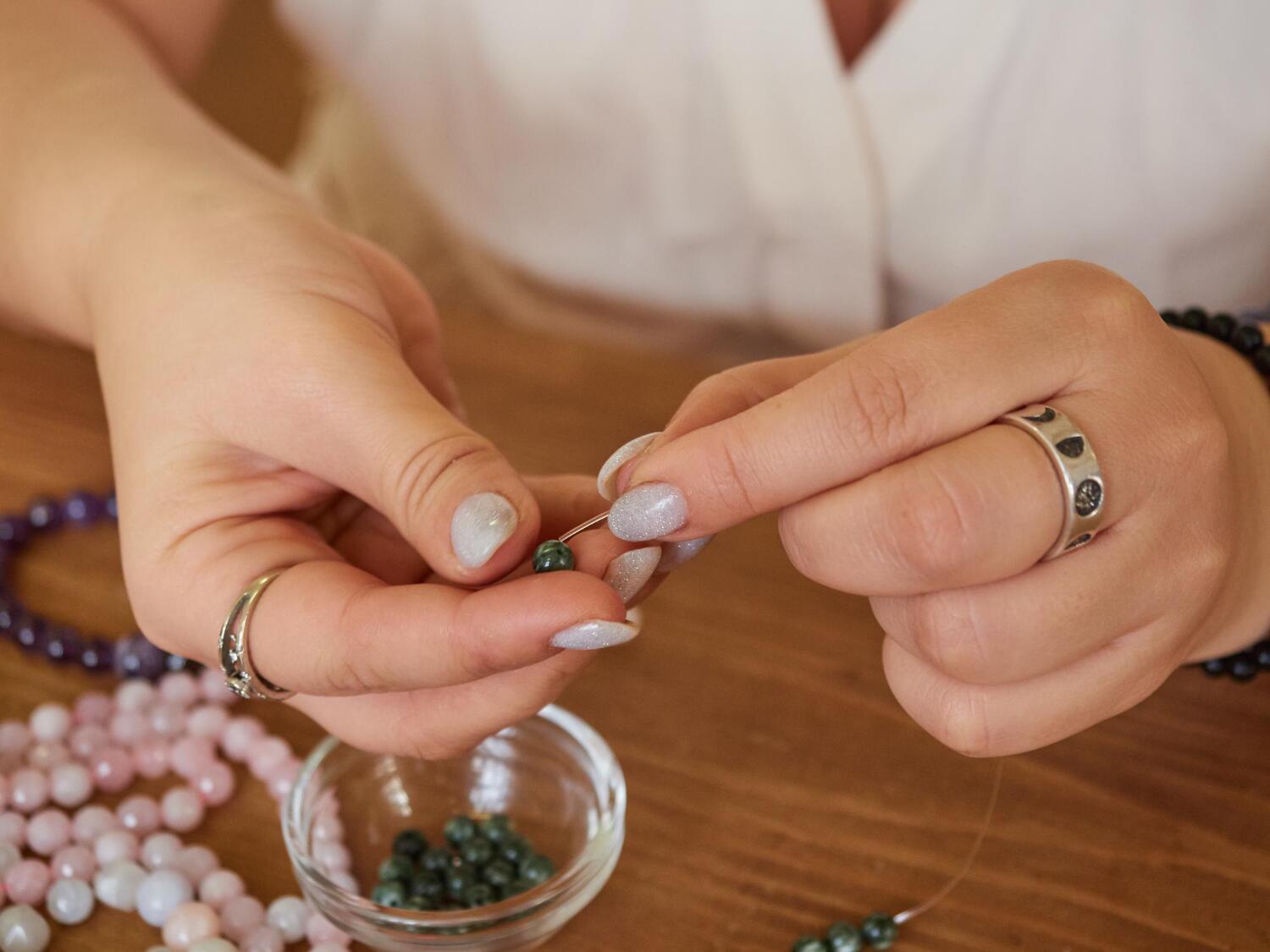
Which findings do you need for handmade jewellery?
Findings are the small parts that connect, close, adjust or finish jewellery. Clasps, jump rings, crimp beads, crimp covers, calottes, wire protectors, extension chains, headpins, eye pins and cord ends all belong in this group.
Beads provide colour and style, but findings do the structural work. They help a design open, close, hang correctly and handle regular wear.
Size is just as important as function. Tiny findings can look weak on heavy jewellery, while large findings can overpower delicate beadwork. The best choice depends on the weight, material and style of the design.
| Finding | Main job | Best for | Main benefit |
|---|---|---|---|
| Lobster clasp | Closing jewellery securely | Necklaces and bracelets | Strong, familiar and easy to use |
| Bolt ring | Smaller fastening | Lighter necklaces and bracelets | Neat and compact |
| Jump ring | Joining components | Clasps, extenders, charms and connectors | Flexible connection point |
| Crimp bead | Securing beading wire | Tigertail and wire designs | Clean wire finish |
| Crimp cover | Hiding flattened crimps | Wire-strung jewellery | More polished clasp area |
| Wire protector | Protecting the wire loop | Wire-strung jewellery | Reduces wear near the clasp |
| Calotte | Hiding knots and creating a loop | Threaded and knotted designs | Cleaner ending |
| Extension chain | Adding adjustability | Necklaces and bracelets | Better fit flexibility |
| Cord end | Finishing thick cord neatly | Cord jewellery | Stronger transition into a clasp |
Totally Beads carries many of these finishing parts, including clasps, wire protectors, calottes, crimp covers, extension chains and starter findings packs.
The material should guide the finishing method
The stringing material should decide the ending before the project begins. Beading wire, thread, elastic and thick cord all need different finishing parts if the result is going to look neat and hold properly.
Beading wire is usually finished with crimp beads, wire protectors, clasp loops and crimp covers. Thread-based jewellery usually needs knots, calottes or similar knot covers. Cord jewellery often needs cord ends, glue-in findings or fold-over ends.
Problems often start when one finishing method is used for every material. Thick cord forced into a tiny knot cover looks awkward. A delicate knotted necklace finished like heavy tigertail wire can look unbalanced. A cleaner result comes from matching the ending to the material from the start.
How do you secure ends on beading wire?
Beading wire is one of the easiest materials to finish neatly when the steps are clear. Tigertail and similar jewellery wires work well for beginner necklaces and bracelets because the finishing method is simple and repeatable.
A crimp bead creates the secure end. The crimp slides onto the wire, the wire passes through the clasp loop or wire protector, and the tail passes back through the crimp to form a small loop. The crimp is then pressed to hold the wire in place.
Loop size needs care before the crimp is closed. A large loop can look loose and rub more than needed. A loop that is too tight can pull the clasp out of position and put strain on the wire.
The wire tail should usually pass back through one or two nearby beads after crimping. This hides the cut point and gives the ending a smoother look. Totally Beads’ Beading Basics content explains this process using tigertail, wire protectors and crimps.
Crimp beads create the main anchor on wire jewellery
Crimp beads hold wire-strung jewellery together at both ends. When flattened correctly, the crimp locks the wire and gives the clasp or jump ring a stable connection point.
Security is the main reason to use crimps. A bracelet or necklace strung on wire still needs a reliable anchor, and the crimp creates that anchor without a bulky knot.
Crimps also help the clasp area look compact. Wire jewellery can look very clean when the crimp is pressed neatly, the tail is hidden and the clasp sits in proportion with the design.
Crimp covers make the clasp area look cleaner
Crimp covers are small metal shells that close over flattened crimps. Once closed, the cover looks more like a small round bead than a working part.
The main benefit is appearance. A flattened crimp may be secure, but it can still look raw beside a clasp. A crimp cover gives the ending a smoother and more deliberate finish.
Crimp covers also help the metal details flow better. A rounded metal bead near the clasp usually blends in more naturally than an exposed fixing point, especially on bracelets and necklaces with matching findings.
Wire protectors reduce wear near the clasp
Wire protectors help protect the point where beading wire bends around a clasp or jump ring. The curved metal channel shapes the loop and reduces direct rubbing at the busiest part of the jewellery.
This extra step can improve durability. Repeated movement near the clasp can weaken wire over time, and a protector gives the loop a cleaner path around the connection point.
Wire protectors also improve shape. The end loop often looks more even, controlled and professional when the wire sits inside a protector instead of bending directly around a ring.
How do you hide knots on thread-based jewellery?
Threaded jewellery usually needs a different finish from wire jewellery. Knots secure the ends, but exposed knots can make the piece look unfinished and can weaken the transition into the clasp.
Calottes solve this neatly. A calotte, knot cover or bead tip hides the knot inside a small metal shell and provides a loop or hook for adding a jump ring or clasp.
The knot should sit snugly inside the calotte before the cover is closed. The loop should also line up with the clasp and other findings. A cleanly closed calotte can make the whole necklace or bracelet look more refined.
Totally Beads stocks calottes with hooks and loops in different finishes, giving makers options for thread-based and knotted jewellery designs.
Calottes are best for knotted thread designs
Calottes work best when the jewellery uses thread, silk or another material that finishes with a knot. Pearl-style strands, delicate beaded necklaces and some thread-based bracelets often look cleaner with a covered knot.
A calotte gives the end a more elegant transition. Instead of a visible knot beside the clasp, the jewellery begins and ends with a small metal cup that connects neatly to the rest of the findings.
They are also practical. The knot sits protected inside the cover, while the metal loop or hook makes it easier to attach the clasp securely.
How do you finish elastic bracelets neatly?
Elastic bracelets need secure knots, hidden endings and the right fit. Because there is usually no clasp, the knot and bead placement do the main finishing work.
The knot must be firm enough for stretch jewellery. A weak knot is often the first failure point, even when the bead design looks good. The knot should be tested gently before it is hidden.
A clean elastic finish usually hides the knot inside a larger-hole bead, decorative metal bead or suitable component. This keeps the working part out of sight without forcing the bracelet out of shape.
Size also affects the finish. The bracelet needs enough ease to roll over the hand without straining the knot, but it should still sit comfortably on the wrist.
Cord jewellery needs endings that fit the cord
Cord jewellery should be finished with parts that match the cord’s thickness, texture and flexibility. Satin cord, waxed cord, suede, leather and braided cord all behave differently.
Cord ends are usually the cleanest choice for thicker materials. Glue-in ends, fold-over ends and selected crimp-style ends create a tidy transition from soft cord into a metal loop or clasp point.
Fit comes before glue. A well-sized cord end grips and frames the material neatly. An end that is too loose or too tight can look clumsy and may weaken the final piece.
How do you choose the right clasp?
Clasp choice should depend on weight, style, ease of use and how the jewellery will be worn. The fastening affects security, comfort and the overall look of the piece.
Lobster clasps are a reliable all-round choice for beginners. They are compact, familiar and secure, which makes them useful for many bracelets and necklaces.
Bolt rings work well on lighter designs where a small fastening looks better. Toggle clasps can become part of the design on chunkier jewellery. Magnetic clasps may help wearers who find small fastenings difficult, but the weight of the jewellery should be checked carefully before using them.
Totally Beads offers different jewellery clasps, including lobster clasps for secure handmade jewellery finishes.
Lobster clasps are popular because they balance strength and size
Lobster clasps are widely used because they offer a good mix of security, simplicity and proportion. The spring closure, neat shape and easy attachment make them suitable for beginner and more polished designs.
They work well with jump rings and extension chains. This makes them useful for bracelets, necklaces and some anklets where a secure fastening is needed without making the clasp area too bulky.
Clasp size still needs attention. Delicate jewellery usually needs a smaller clasp than a heavy gemstone strand or thick cord design. Totally Beads includes lobster clasps in individual listings and Findings Essential Kits, which makes them an easy option for starter projects.
Jump rings need clean opening and closing
Jump rings are small, but they handle a lot of connection work. Clasps, extenders, charms, chain sections and pendant links often rely on jump rings to sit correctly.
A jump ring should usually be opened by twisting sideways, not pulled apart front to back. Sideways opening keeps the circular shape more stable and helps the ring close neatly.
A fully closed ring has no visible gap. This is important because fine chain, thread or wire can slip through a small opening over time.
Scale also affects the finish. Large rings can make delicate jewellery look heavy, while tiny rings can make clasping awkward or put strain on the end of the piece.
Extension chains make jewellery easier to fit
Extension chains add adjustability to necklaces and bracelets. They allow the clasp to connect at different points, which helps the wearer choose a more comfortable fit.
The extender usually sits opposite the main clasp. This keeps the fastening easy to use and prevents the central design from twisting awkwardly.
Length should feel useful without becoming excessive. A bracelet extender that is too short adds little value, while one that is too long can dangle awkwardly. A necklace extender should add flexibility without upsetting the balance of the design.
A small charm or tag at the end of the extension chain can improve handling and make the finish look more considered.
Extenders are useful for gifts, bracelets and layering necklaces
Extenders are especially helpful when the final wearer may need a slightly different fit. Gift jewellery, online-order jewellery and layering necklaces often benefit from extra length options.
Necklaces near the collarbone often gain the most from an extender. Small length changes can affect how a necklace sits with necklines, shirt collars and other chains.
Bracelets can also feel better with a small amount of adjustment. A little flexibility can make the difference between a bracelet that feels too tight and one that sits comfortably.
Metal finishes should look intentional
Metal consistency helps handmade jewellery look more polished. Clasps, jump rings, calottes, crimp covers, extenders and decorative metal beads usually look best when they belong to the same finish family.
Mismatched metal can weaken the design quickly. A silver-toned bracelet with one bright gold jump ring can look accidental unless the mixed-metal style is clearly part of the design.
Perfect matching is not always necessary. Slight tonal differences can still work across plated findings, but the overall finish should feel planned rather than random.
How do you trim tails and ends neatly?
Tail trimming should happen only after the connection has been checked. Wire tails, thread ends and adhesive residue can spoil a neat clasp area if they are cut too early or left rough.
Sharp cutters and scissors create cleaner endings. Jagged cuts can catch on fabric or skin, especially near clasps and bracelet ends.
The neatest finish often hides the tail. Wire can pass back through a few beads, thread can be tucked securely, and cord can sit inside a properly sized cord end or knot cover.
Necklace finishing needs strength, comfort and drape
A necklace finish should support the weight of the piece and feel comfortable at the back of the neck. Clasp size, end loops, extender placement and trimming all affect the final feel.
Length should be measured with the clasp and extender included. Adding the fastening at the end without checking the total drop can make the necklace sit higher or lower than planned.
Weight changes the finishing choice. Heavy necklaces need stronger clasps, loops and connection points than delicate strands. A fine clasp may look elegant, but it still needs to support the design.
Comfort is especially important around the back of the neck. Bulky knots, rough trimming and badly aligned findings can make a necklace unpleasant to wear.
Bracelet finishing needs extra strength
Bracelets need strong finishing because they move constantly and are often fastened with one hand. Clasps, crimps, knots and jump rings face more strain on the wrist than they do on many necklaces.
Fit should be checked before the final closure. A bracelet that is too tight feels restrictive, while one that is too loose can twist and catch.
The clasp area often shows during normal wear. Tidy endings, matched hardware and well-sized rings are easier to notice on bracelets, especially on simple designs.
Testing is essential for bracelets. A light pull can reveal a slipping crimp, weak knot or half-closed jump ring before the piece is worn.
Earring finishing depends on small details
Earring finishing may look simple, but the small scale makes every detail visible. Loops, headpin turns, connector rings and ear wires need to sit cleanly for the pair to look balanced.
Loop shape is the first detail to check. A tidy loop can make a bead-drop earring look polished, while a crooked loop can make the whole design feel rushed.
Both earrings should match in direction, length and finding type. Small differences become more obvious because the project is compact and worn as a pair.
Comfort should also be checked. Ear wires, hooks and small connectors should sit smoothly without sharp edges or awkward angles.
How do you test finished jewellery?
Testing is part of the finishing process. Gentle pull checks, clasp checks and fit checks help catch problems before the piece is worn, gifted or sold.
Start with a light tension check at both ends. This can reveal a slipping crimp, weak knot or open jump ring.
Handle the jewellery like a wearer would. Open and close the clasp, check the extender, test the bracelet fit and see how the necklace sits.
Finish with a visual check. Look for metal mismatch, uneven loops, rough tails and end points that do not sit cleanly. A short final check can improve the result more than adding extra decoration.
Common finishing mistakes beginners make
Rushing the final steps is one of the most common finishing mistakes. Loose loops, visible working parts and rough trimming can weaken the whole piece.
Using the wrong findings is another frequent problem. Oversized clasps on delicate necklaces, tiny knot covers on thick cord and weak jump rings on heavy designs all create avoidable issues.
Skipping the final test can also lead to failure. Jewellery may look complete on the mat but still have a weak clasp loop, slipping crimp or half-closed jump ring.
Better finishing starts with better choices
Cleaner finishing usually comes from suitable findings, slower final steps and a clear end plan. The technique does not need to be complicated.
Starter packs can help beginners practise the basics. Totally Beads Findings Essential Kits include pieces such as lobster clasps, headpins, earwires, calottes, jump rings, crimp beads and tigertail wire, along with illustrated instructions.
Practice projects are useful too. A simple bracelet made to practise crimping, knot hiding and extension-chain placement can teach more about finishing than a complicated necklace attempted too soon.
Finishing is what makes handmade jewellery feel complete
Finishing work turns assembled materials into jewellery that feels ready to wear. Secure ends, hidden knots, neat extenders and well-chosen clasps give the piece strength, comfort and polish.
Professional-looking jewellery often comes from small decisions done well. Balanced findings, clean loops, tidy trimming and thoughtful fit adjustments can lift even a simple design.
Totally Beads gives makers access to the finishing parts and beginner learning content needed to improve those details, including clasps, crimp covers, wire protectors, calottes, extension chains, starter packs and Beading Basics guidance. The best finish is clean, secure and matched to the material you are using.