
Best Beads for Summer Jewellery: Coral, Shell and Bright Glass
Shell, bamboo coral, mother of pearl and bright glass are the four families that carry a summer collection, and glass is the only one of them you can wear in the sea without thinking about it. Everything else needs a small amount of care, and knowing which is which is what separates a summer piece that gets worn all season from one that goes dull by the second week of the holiday.
This guide covers what each material actually is, including the coral question that most sellers avoid, which pieces survive salt water, chlorine and sun cream, what to string a summer piece on when elastic keeps failing in the heat, and how to build a shell necklace that reads as current rather than as a souvenir from 2004.
Browse the pearls and shells range at TotallyBeads. String lengths and hole sizes are listed on every product, and orders placed before 12 noon leave our Clacton-on-Sea warehouse the same day.
Which beads suit summer jewellery?
Four families do the work, and each brings something the others cannot.
Shell brings the natural, holiday look that defines summer jewellery. Disc beads, heishi, flat spacers and drops in white, tan, charcoal and olive, in shapes that sit flat and layer well.
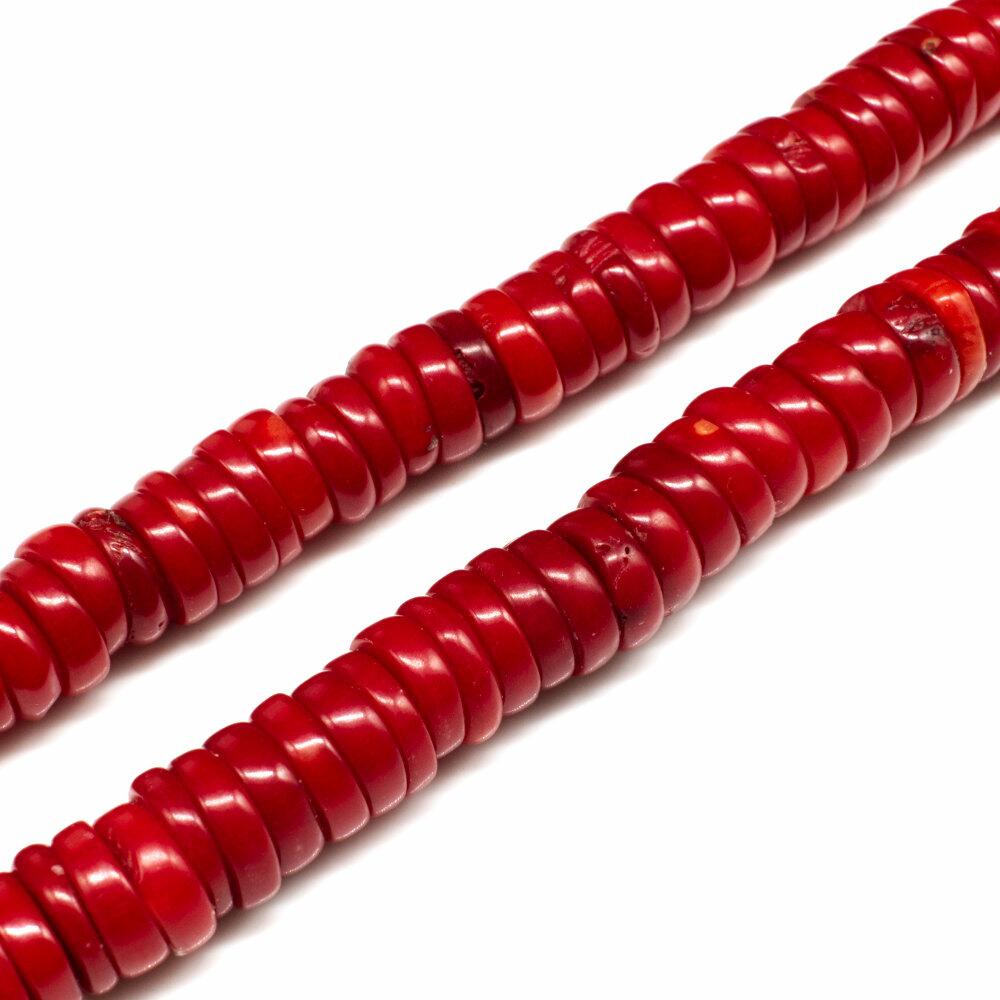
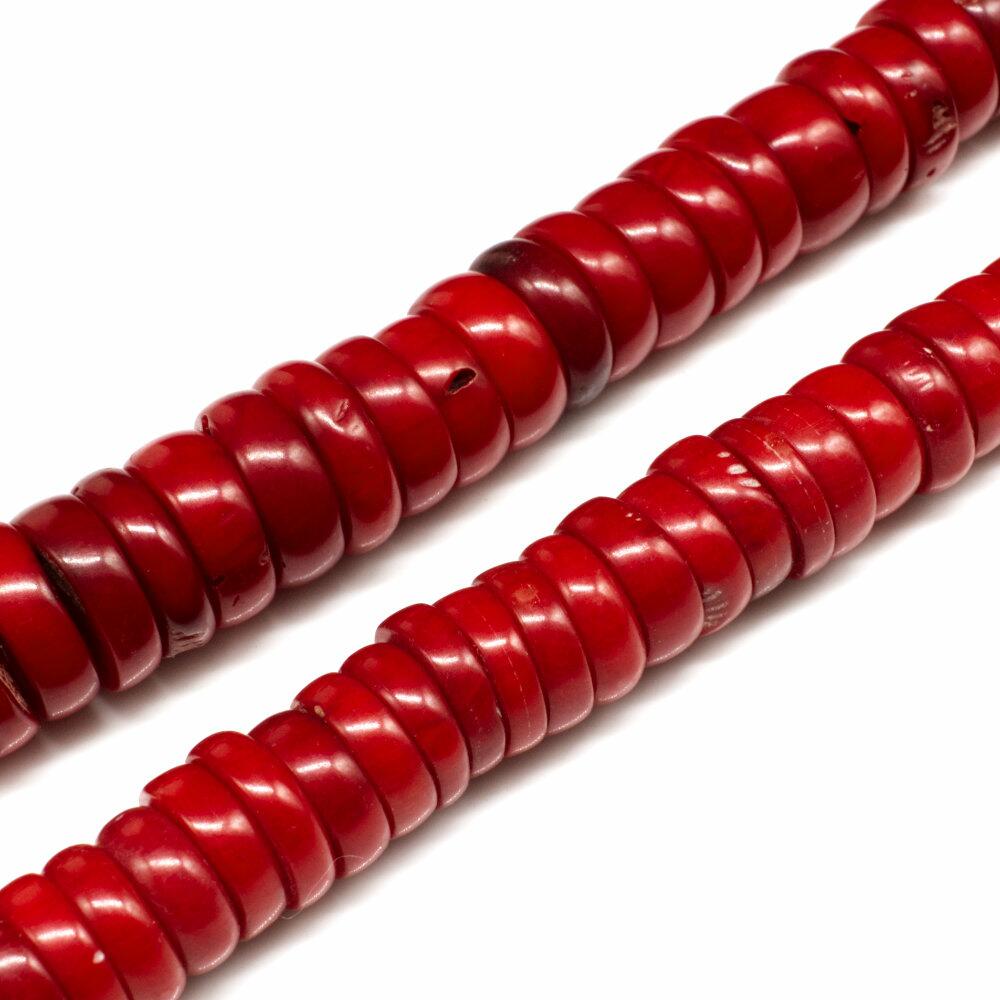
Bamboo coral brings the colour. Deep red, coral pink, peach and white, in tubes, discs, nuggets and heishi rondelles. It is the only material on this list that gives you a strong warm red at a sensible price.
Mother of pearl and abalone bring the shift. Both change colour with the angle of the light, which is why they read as expensive even in small pieces.
Bright glass and crystal bring reliability. Glass does not fade, does not mind salt water, and comes in every colour you could want. It is the material to reach for when a piece needs to survive a fortnight of actual use rather than sit in a jewellery box.
Most good summer pieces use two of the four. One hero material, one supporting, and a repeat.
Is bamboo coral real coral?
Bamboo coral is a real marine organism and it is not the precious reef coral that conservation concerns are about. It is worth being precise, because the trade uses the word coral loosely and buyers deserve a straight answer.
Bamboo coral comes from sea bamboo, a deep-water species that grows in segmented stems. It is naturally pale, close to white or cream, and almost all of the red, pink and peach material on the market has been dyed. That dyeing is standard and it is not a defect. It is a fact that should appear on the listing.
Precious coral, the dense red reef material used in antique jewellery, is a different proposition entirely and comes with genuine sustainability questions. TotallyBeads sells bamboo coral beads, and the listings say so.
Good to know
The practical consequence of the dye is worth knowing. Dyed bamboo coral will fade under prolonged strong sunlight and can lose colour in chlorinated water. A holiday necklace worn every day for a fortnight in the Mediterranean will not come home quite the shade it left in. That is not a reason to avoid it. It is a reason to rinse the piece in fresh water at the end of the day and to keep it out of the pool.
Summer material starter set
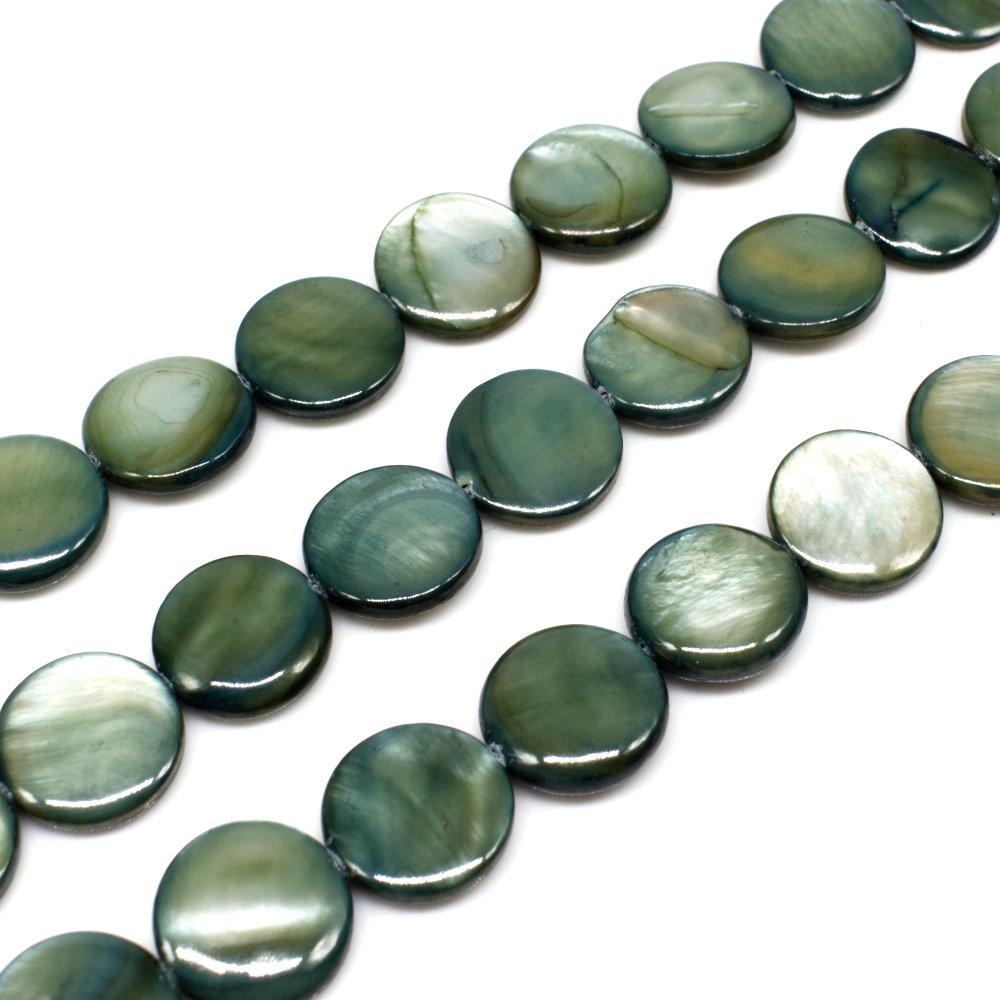
Two coral heishi strings and two shell discs. Hole sizes and bead counts listed on every product page.
What are the shell bead types?
Six types cover almost every summer design, and they are not interchangeable.
Shell disc. Flat rounds, usually 11 mm to 20 mm, roughly 20 to 35 beads on a string. The backbone of a shell necklace. Available in white, brown, charcoal, dark grey, olive and pink, some with natural line markings.
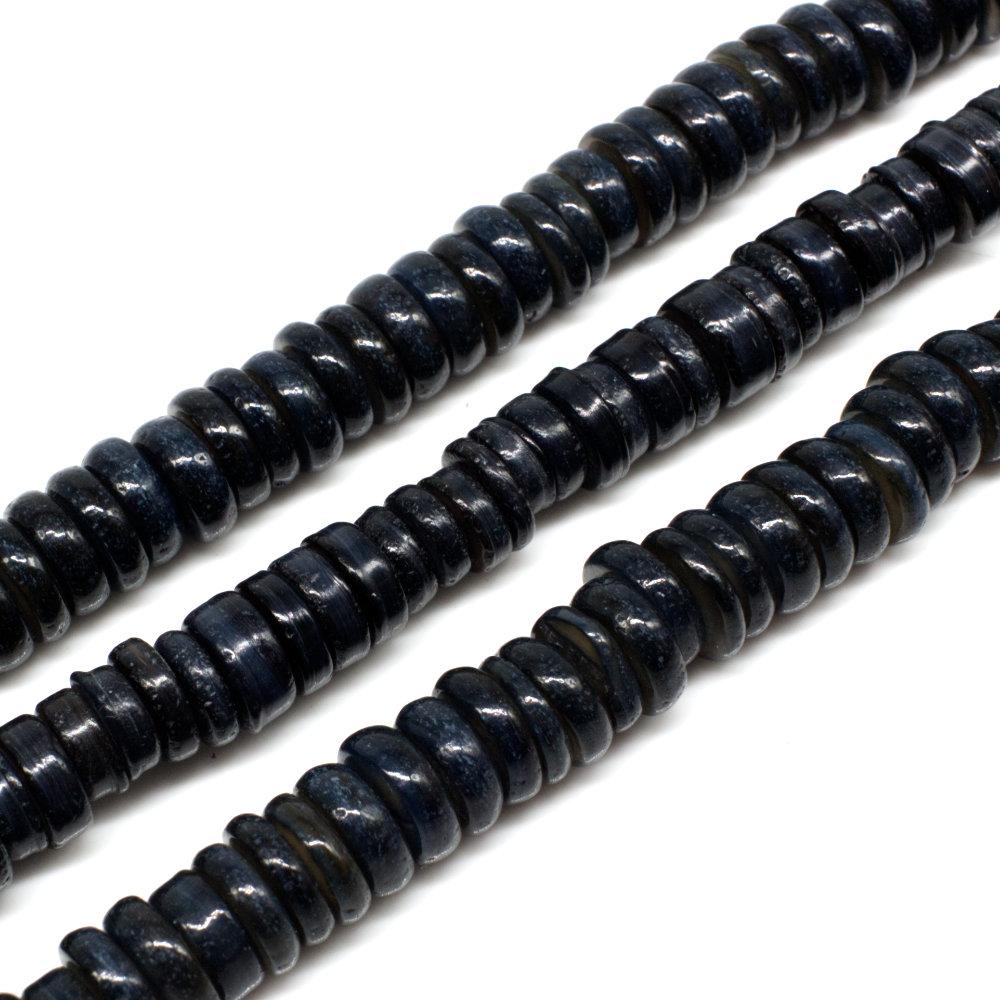
Heishi. Thin discs stacked close, giving a solid band of colour rather than individual beads. Reads as one continuous surface. Strong for chokers and anklets.
Diagonal square. Larger flat squares around 25 mm, set at an angle. Statement pieces, used sparingly.
Flower and drop shapes. Cut shell in flower discs and teardrops, for a focal point or for earrings.
Flat spacer discs. Two-hole and four-hole shell discs that sit between strands in a multi-row piece. These solve the problem of keeping two strands parallel without them tangling.
Mother of pearl. The iridescent inner layer, cut into beads and pendants. It shifts through pinks, greens and blues as it moves. The mother of pearl range sits alongside the abalone shell range, which is darker and shifts harder.
Shell pearls and freshwater pearls are a separate proposition again. A shell pearl is a shell core with a pearlised coating, which gives you a perfectly round, uniform bead at a fraction of the cost of a freshwater pearl. For anything where matched roundness matters more than provenance, shell pearls are the sensible buy.
What survives the sea, the pool and the sun cream?
This is the question nobody answers and it decides whether a summer piece gets worn.
| Material | Sea water | Chlorinated pool | Sun cream and oils | Verdict |
|---|---|---|---|---|
| Glass and crystal | Fine | Fine | Wipes clean | Wear it anywhere |
| Natural shell | Rinse after | Avoid | Dulls the surface | Take it off first |
| Dyed bamboo coral | Rinse after | Avoid, dye can lift | Dulls and can mark | Take it off first |
| Mother of pearl | Rinse after | Avoid | Dulls the iridescence | Take it off first |
| Wooden beads | Avoid, absorbs | Avoid | Absorbs and stains | Keep dry |
| Plated findings | Avoid | Avoid | Accelerates wear | The weak point on any summer piece |
Two things worth pulling out of that table.
Sun cream is worse than sea water. It is oily, it carries a lot of chemistry, and it does not rinse off. It sits on the surface of a shell bead and dulls it, and it works into the seam between a bead and its coating. The habit worth building is jewellery last, after the cream has gone on and dried.
The findings fail before the beads do. A shell necklace with a plated clasp will lose the clasp long before it loses the shell. For anything genuinely intended for holiday wear, spend the extra on a better clasp or design the piece with a cord tie instead.
What do you string summer beads on?
Elastic is the wrong choice for holiday jewellery, and this catches out almost every maker who sells at a seaside market.
Elastic perishes. Heat accelerates it, ultraviolet light accelerates it, and sun cream and suntan oil attack it directly. A stretch bracelet that would last two years in a British winter can fail in a fortnight on a beach holiday. If a customer is buying a piece to take away, tell them, or build it differently.
Four better options for summer work.
Wax cotton cord. The natural partner for shell. It suits the aesthetic, it takes a sliding knot so the piece is adjustable, and it survives water. The wax cotton cord range covers the useful colours and diameters.
Braided cord and leather. For larger-hole beads and a chunkier look. Check hole sizes first, because most natural shell is drilled at 0.8 mm to 1 mm and will not take standard leather cord at 2 mm.
Tigertail wire. Where the piece needs to hang cleanly and hold its shape, particularly on a graduated necklace.
Elastic, but only for pieces staying at home. The beading elastic range is still the right answer for a summer bracelet worn in town rather than on a beach.
The hole size problem
Natural shell and coral holes run from 0.5 mm on the small round coral through to 1 mm on the larger nuggets. That is narrow, and it rules out a lot of the cord that looks right with shell.
Check the listed hole diameter before you buy the cord, not after. The commonest wasted purchase in summer beading is a metre of beautiful 2 mm waxed cord and a string of shell discs drilled at 0.8 mm.
Where you want the chunky cord look with small-holed beads, the answer is a wrapped or knotted construction rather than threading the beads directly, or a large-hole spacer between shell sections.
What are the summer bead trends worth following?
Who What Wear lists shell necklaces and beaded necklaces among its named summer 2026 jewellery trends, alongside stacked bangles, Y2K charms and fish motifs. Two of those five are directly makeable from beads, which is unusually favourable for anyone selling handmade.
What that means practically.
1Shell necklaces are back and the styling has changed. The current version is not the tight puka-shell choker. It is longer, looser, with visible spacing between the shell elements and often a single larger focal. Space your discs. Do not crowd them.
2Beaded necklaces are being worn bold. Larger beads, stronger colour, worn as the only piece rather than layered under a chain. That favours 10 mm and up, which is good news for margin.
3Stacking is the through-line. Three thin bracelets sell better than one thick one, and they let you use up short lengths and odd counts.
4Fish and sea motifs give you a pendant angle. The shell pendant range covers the natural end of that.
A worked example
A maker building a summer market table costed a single shell necklace properly before deciding what to charge. Two strings of 11 mm shell discs at £3.95 each gave her around 70 beads. A metre of wax cotton cord came to under 50p. She built three necklaces at roughly 22 beads each, spaced with small glass rounds she already had, at a material cost near £3 a piece. Priced at £14 on the table, all three sold across two Saturdays.
And a mistake worth avoiding
A seller made forty stretch anklets in dyed bamboo coral for a seaside pitch in July. They looked excellent and they sold well. Eleven came back over the following six weeks, all with the same failure, and all from customers who had worn them in the sea and on the beach with sun cream. She rebuilt the design on wax cotton with a sliding knot, kept the same beads, and had no returns for the rest of the season. The beads were never the problem. The elastic was.
How do you look after summer jewellery?
Four habits, and they cover almost everything.
✓Jewellery last, after sun cream. The single highest-value rule.
✓Rinse in fresh water at the end of a beach day. Sea salt left to dry on shell and coral is abrasive and dulls the surface.
✓Dry properly before storing. Damp shell in a closed box goes cloudy, and damp cord holds the smell.
✓Store out of direct sunlight. Dyed coral and dyed shell will fade on a sunny windowsill over a single summer. A drawer costs nothing.
None of this makes summer materials fragile. Shell and coral have been made into jewellery for thousands of years. It makes them materials with a care routine, which is a different thing, and it is worth putting on a small card with anything you sell.
How do you judge shell and coral bead quality?
Three checks.
Check one
Drill cleanliness. Natural shell chips at the drill exit. A little is normal. A string where a third of the beads have visible chipping around the hole will look rough in a finished piece.
Check two
Colour consistency across the string. Natural shell varies and that variation is part of the appeal. Dyed material should be consistent, and patchiness in a dyed string suggests a rushed dye run.
Check three
Edge finish. Run the string across your palm. Sharp edges on disc beads will catch on clothing and on skin, and they are the reason some shell necklaces are never worn twice.
Summer beads FAQ
Which beads are best for summer jewellery?
Shell, bamboo coral, mother of pearl and bright glass. Shell and coral give the natural holiday look, mother of pearl gives the iridescent shift, and glass gives you colour that will not fade and does not mind water.
Can you wear shell jewellery in the sea?
Briefly, and rinse it in fresh water afterwards. Repeated sea water exposure dulls the surface of natural shell over a season, and it will corrode plated findings faster than it damages the beads. Take a piece off before swimming where you can.
Is bamboo coral the same as real coral?
Bamboo coral is a real marine material from deep-water sea bamboo, but it is not the precious reef coral used in antique jewellery. It is naturally pale and almost all coloured bamboo coral has been dyed, which should be stated on the listing.
Why does my shell necklace look dull?
Sun cream is the usual cause. It leaves an oily film that dulls the surface and does not rinse away. Chlorine and dried sea salt do the same thing more slowly. Put jewellery on after cream has dried, and rinse and dry the piece at the end of a beach day.
What should I string summer beads on?
Wax cotton cord for shell and coral, because it suits the look, takes a sliding knot and survives water. Avoid elastic on anything going on a beach holiday, since heat, ultraviolet light and sun cream all shorten its life considerably.
What hole size do shell and coral beads have?
Most run between 0.5 mm and 1 mm. That is narrower than it looks, and it rules out standard 2 mm leather cord. Check the listed hole diameter before buying your stringing material.
Building your summer collection
Start with one string of shell discs, one string of bamboo coral heishi and a reel of wax cotton cord. That comes to well under £20, makes three or four pieces, and teaches you how the two materials sit together better than any planning will. Add bright glass where you need a colour that will not fade, and mother of pearl where you want a piece to look more expensive than it cost.
Space the shell rather than crowding it, string on cord rather than elastic for anything going near a beach, and put a small care card in with anything you sell. Those three decisions are what turn a summer piece into one that comes back out next June.
Browse the pearls and shells range to pick a shape, look at bamboo coral for the warm reds and peaches, or explore the glass bead range for colour that survives anything. For a wider view on which materials suit which kind of wear, read our guide to choosing the right bead material for everyday wear, and for the meanings, care and design side of natural materials our guide to gemstone, pearl and natural beads covers the ground in more detail. If you would rather start with everything in one box, the necklace kit range includes the findings and instructions.
Related reading
Understanding bead sizes and hole sizes for stringing
The companion piece to the 0.8 mm problem above, covering how sizes and holes work across every bead family.
Complete guide to bead types and materials for jewellery making
A wider look at how glass, gemstone, pearl, wood and metal behave once a piece is actually worn.
Start your summer collection
Shell discs, bamboo coral heishi and wax cotton cord, with hole sizes and bead counts on every listing. Order before 12 noon and it leaves Clacton-on-Sea the same day.
Shop shell disc beadsShop wax cotton cord
Join the Bead Club for member pricing, watch the Facebook tutorials for stringing technique, or call our Clacton team on 01255 431629.